


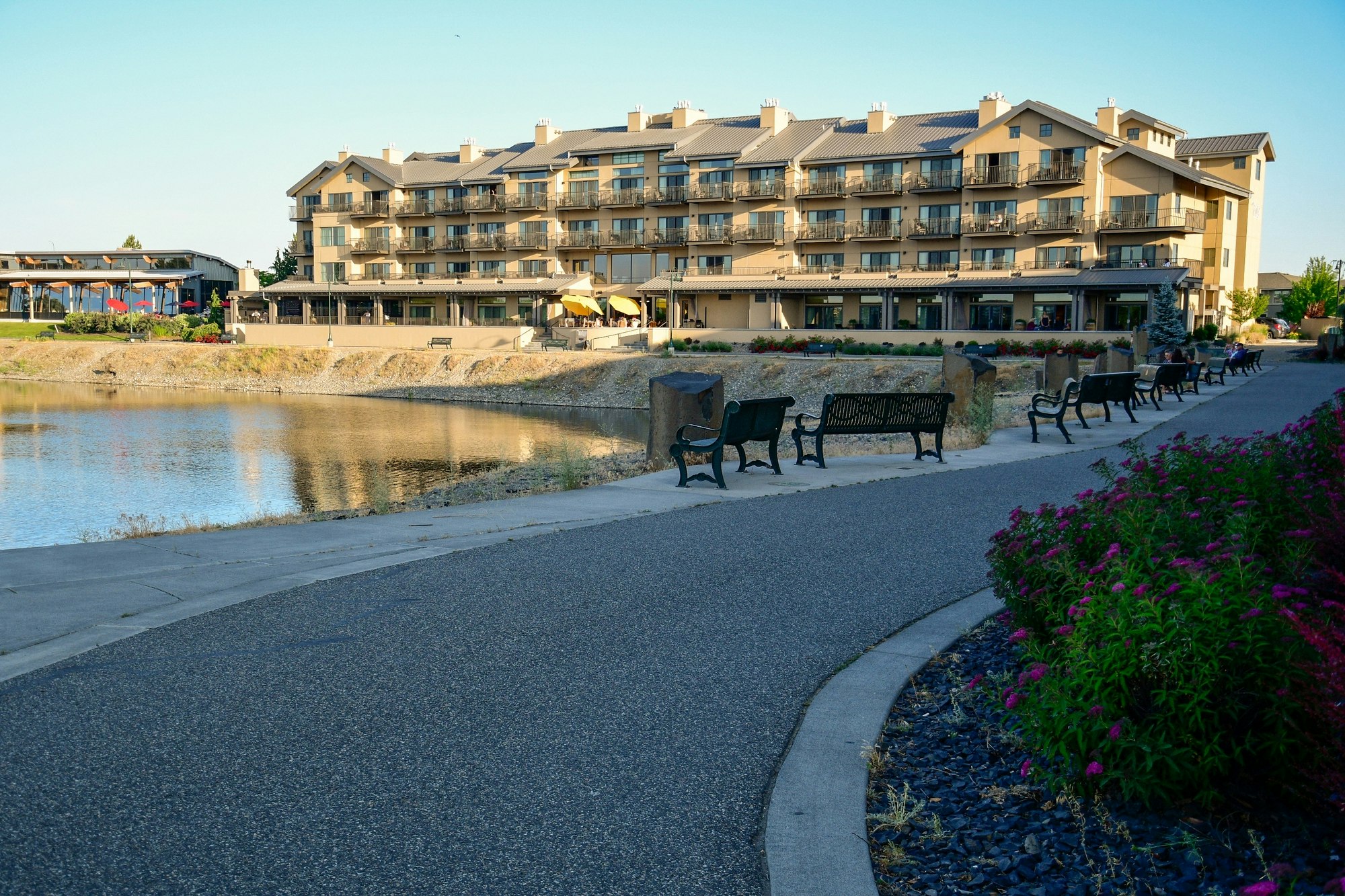


Uptown Shopping Center
Life in the Tri-Cities revolved around supporting one of WWII's most secretive missions.
While the Hanford Site worked in secrecy, everyday life across the Tri-Cities carried on, but nothing about it was ordinary.
Richland was a federally owned town, and life there was structured around supporting the war effort. Homes were assigned based on job roles and family size, and the government provided everything from housing to entertainment. Churches, schools, theaters, and barber shops filled this engineered community, where nearly every aspect of life was tied to a mission no one could talk about.
In neighboring Kennewick and across the river in Pasco, life looked different but was just as connected to the war effort. Many workers commuted to Hanford from these cities, while the established agricultural and rail economy, and the growing neighborhoods of Kennewick helped support the region’s rapid population growth.
Workers and their families formed clubs, planted gardens, and lined up for rationed goods. Children played in parks built by the Army Corps of Engineers, and residents across the Tri-Cities adapted to wartime routines shaped by scarcity, secrecy, and shared purpose. These experiences were not equal for everyone. Due to housing restrictions, many black workers and their families lived in Pasco. As a result of segregation and limited access to housing and services, they built strong, resilient communities of their own.
Across the region, resilience, rapid growth, and a sense of shared purpose defined daily life. These stories of home life are intertwined in WWII history as much as science and industry developed at Hanford.
Cookies Policy
This website uses cookies to enhance your user experience on our website. More Info


