




Clover Island
During World War II and the postwar decades, Clover Island evolved from submerged sandbar to strategic Port property. It played a small but meaningful role in supporting regional transportation and workforce life along the Columbia River.
During World War II and the postwar decades, Clover Island evolved from submerged sandbar to strategic Port property. It played a small but meaningful role in supporting regional transportation and workforce life along the Columbia River.
Where a Growing City Balanced Industry and Leisure
In 1941, the Port of Kennewick acquired part of Clover Island to support wartime river operations. The island hosted barge-building sites and tugboat construction, including the powerful Winquatt in 1944, boosting its role as a working shoreline for wartime commerce.
In 1953, the island was expanded and connected to the mainland by a causeway, transforming into a sixteen-acre waterfront hub. Over time, it became a place for both work and leisure.
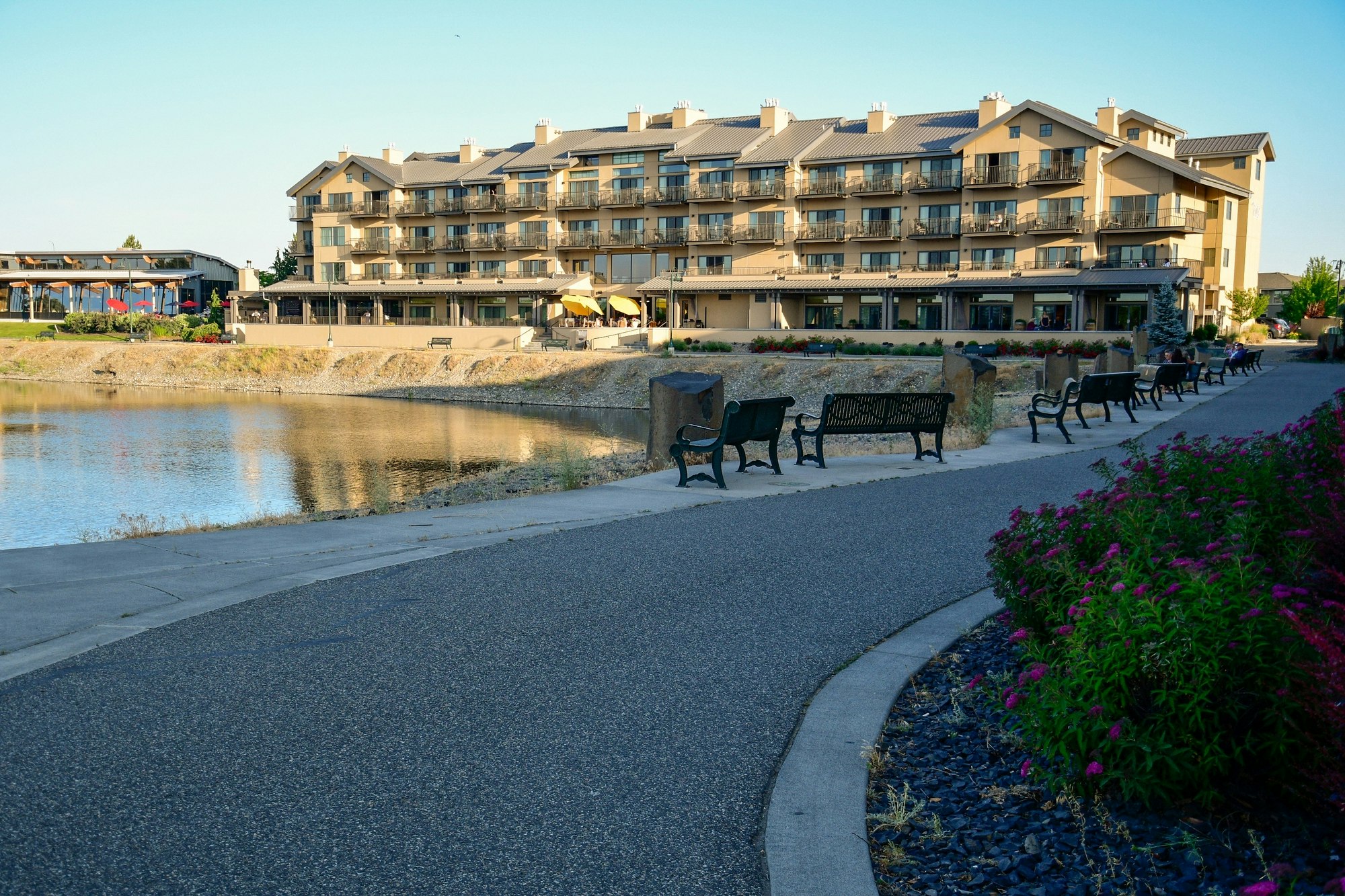
Today, Clover Island is a vibrant destination. Visitors can relax at waterfront restaurants, walk the scenic riverfront, and admire the Clover Island Lighthouse, a 62-foot concrete beacon built in 2010, the first new U.S. lighthouse since 1962.
