




The Neighborhood Built for a Mission
Life in the Tri-Cities revolved around supporting one of WWII's most secretive missions.
While the Hanford Site worked in secrecy, everyday life across the Tri-Cities carried on, but nothing about it was ordinary.
Richland was a federally owned town, and life there was structured around supporting the war effort. Homes were assigned based on job roles and family size, and the government provided everything from housing to entertainment. Churches, schools, theaters, and barber shops filled this engineered community, where nearly every aspect of life was tied to a mission no one could talk about.
In neighboring Kennewick and across the river in Pasco, life looked different but was just as connected to the war effort. Many workers commuted to Hanford from these cities, while the established agricultural and rail economy, and the growing neighborhoods of Kennewick helped support the region’s rapid population growth.
Workers and their families formed clubs, planted gardens, and lined up for rationed goods. Children played in parks built by the Army Corps of Engineers, and residents across the Tri-Cities adapted to wartime routines shaped by scarcity, secrecy, and shared purpose. These experiences were not equal for everyone. Due to housing restrictions, many black workers and their families lived in Pasco. As a result of segregation and limited access to housing and services, they built strong, resilient communities of their own.
Across the region, resilience, rapid growth, and a sense of shared purpose defined daily life. These stories of home life are intertwined in WWII history as much as science and industry developed at Hanford.
The Neighborhood Built for a Mission

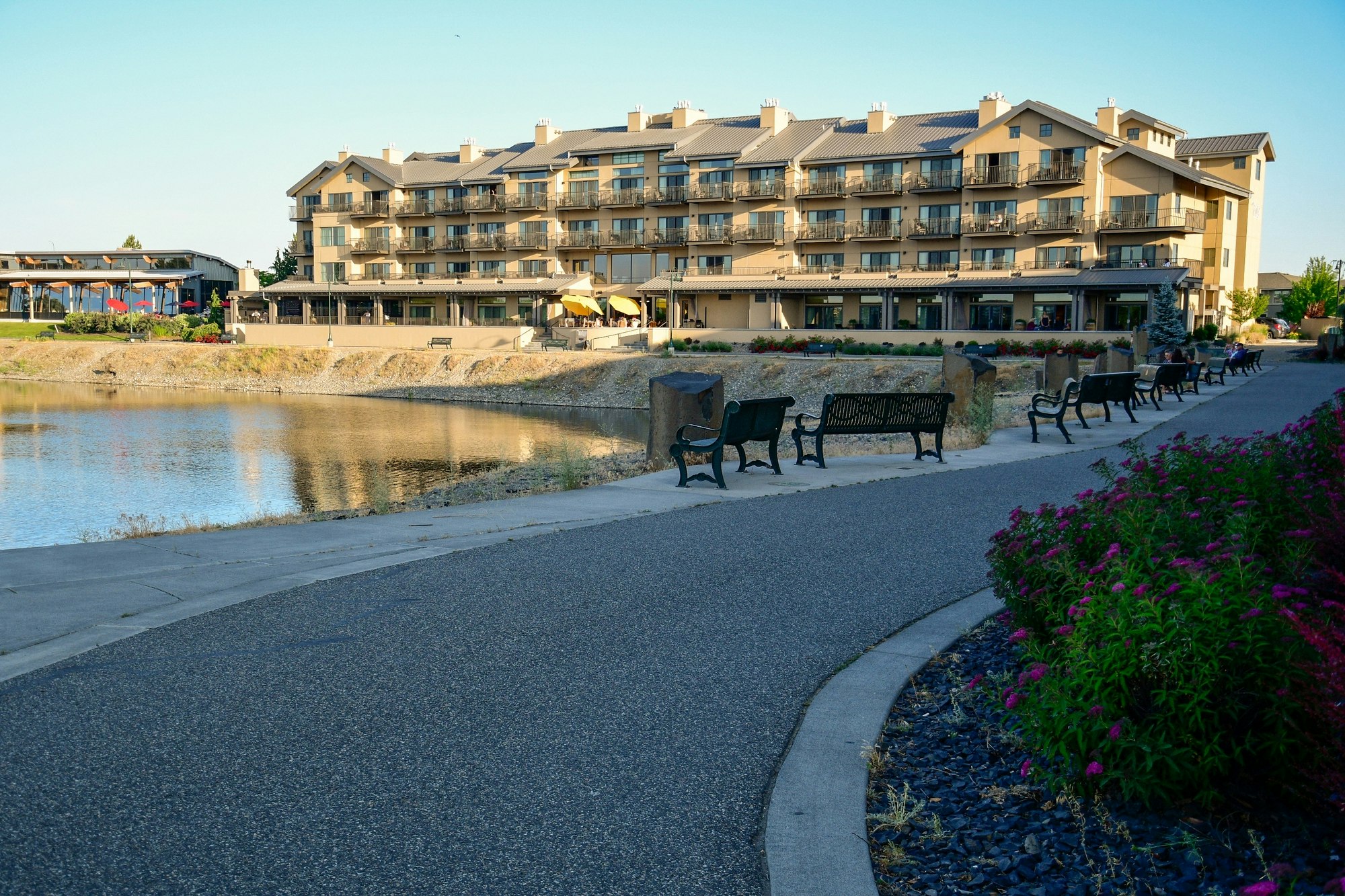
In a city built for secrecy and science, Howard Amon Park offered something rare: open space, recreation, and a sense of normal life. Developed during World War II, the park was designed to serve the growing Richland community and boost worker morale.

Before Richland became the city we know today, it was a federally controlled town managed by engineers and administrators working for the U.S. government. At the center of it all was City Hall — not just a civic building, but a symbol of military-era governance.

While most Richland residents lived in nearly identical Alphabet Homes during World War II, the Gold Coast reflected the city's next chapter. Built during the Cold War, its larger homes, tree-lined streets, and Columbia River views welcomed many of Hanford's scientists, engineers, and community leaders.

Once a thriving farm town with schools and churches, Hanford disappeared almost overnight to make way for the Manhattan Project. Its name now belongs to a site, but its history belongs to its people.

Before commercial jets filled its runways, Pasco’s airport served a higher-stakes mission. During World War II, this airfield became one of the busiest training sites in the country and today, its story lives on in the very same tower that watched it all unfold.

Before it became a civic gathering space, Vista Field played a quieter but vital wartime role. As a naval auxiliary airfield during World War II, it helped prepare thousands of aviation cadets for missions across the globe.

Built in 1922, the Pasco–Kennewick Bridge, known locally as the Green Bridge, was the Tri‑Cities’ first vehicular crossing. It shifted the region from isolated ferry towns to a connected community, serving as the only route between Pasco and Kennewick for more than five decades.

Designed during wartime and built in the aftermath, The Parkway in Richland was no ordinary downtown. It was part of a federally planned experiment in how to create a livable city overnight.

As thousands of new residents arrived in the Tri-Cities during WWII, one place became a spiritual anchor for Black workers and their families: Morning Star Baptist Church.

During World War II and the postwar decades, Clover Island evolved from submerged sandbar to strategic Port property. It played a small but meaningful role in supporting regional transportation and workforce life along the Columbia River.

Kennewick wasn’t part of the Hanford Site, but it felt the impact. During WWII, the city’s downtown grew rapidly to serve the rising population of workers, families, and support staff flooding into the region.

Overlooking the Columbia River, the REACH Museum connects past to present, tracing the story of the region from ancient landscapes to the Manhattan Project and beyond.

Housed in a restored 1911 Carnegie Library, the Franklin County Historical Museum brings the story of Pasco’s wartime transformation to life; with a focus on migration, labor, and community resilience.

In North Richland, a towering submarine sail rises unexpectedly from the earth, a Cold War relic with roots deep in the Hanford Site’s World War II legacy. The USS Triton Sail Park offers a tangible link between wartime science and postwar military innovation.

Located in near Historic Downtown Kennewick, the Museum at Keewaydin is dedicated to preserving the rich and diverse heritage of East Benton County. From pioneer settlements to local industry and culture, the museum captures the everyday lives and legacies of the people who helped shape the region.

Located in Prosser, this cemetery became the reinterment site for the White Bluffs community when Hanford was built. It preserves the memory of lives uprooted, and graves moved, as part of one of the largest displacement operations in U.S. history during World War II.

At Washington State University Tri-Cities, the Hanford History Project preserves the human stories behind one of the most secretive and significant chapters in American history. Through archives, exhibits, and partnerships, the project ensures that the people of Hanford are remembered alongside its science.
Cookies Policy
This website uses cookies to enhance your user experience on our website. More Info


